Key Characteristics
Sustainability was key factor considered while Innova decided to invest on the HIRC. It is designed,
developed and constructed in an economically and environmentally responsible manner. The key
characteristics of this project, which also can be termed as company’s key competitive differentiators, are
listed below
Zero-Waste
The plant is designed and constructed based on the concept of ‘Zero-Waste’ generation. We, at Innova believe that there is no waste in petroleum and petrochemical industry if you possess the right technology. HIRC has incorporated the use of pollution control modules, including wastewater treatment plants and air emission controls with no flaring from the chimneys (wet and dry zig zag scrubbers). Air emission parameters are monitored in real time to ensure emission compliance at all times.
Flexibility in Feedstock selection
Unlike the majority of petroleum and petrochemical companies that design their process with selected product lines and feed stock in mind, Innova, with the assistance of their technical partners, is successful in incorporating all the critical process available in the industry under one roof. Module II of the plant has multiple distillation columns and is designed to run on continuous basis or batch basis and has incorporated multiple receiving vessels. This allows feedstock change in a very short time (less than 4-6 hrs) unlike 1 to 2 weeks in other petrochemical plants. This technology along with the inception of state-of-the-art R&D division gives Innova the enormous flexibility of handling multiple feedstocks ranging from used oils, downgraded fuels, AGO, VGO, solvents, Naphtha, condensate, PyGas, by-products from other petrochemical plants etc. This ensures that the plant capacity utilization is not compromised due to shortage of feedstock.
Fuel
CNG will be used as fuel for the plant utilities in place conventional fuels like gas oil. CNG fuel is known for its environment friendly characteristics and low cost. Design objectives HIRC facility are to process principally five (5) waste or semi- finished hydrocarbon feed stocks targeting higher values. Essentially the complex is capable to produce more than 60% of its productsto circular reuse. Major feed streams to the processing facility are as below:
- Semi-finished Hy Pyrolysis oils /BTX, ex Petrochemical industry.
- Spent or used lubricant oils and engine oils.
- Contaminated single or multi component Glycols.
- Tyre pyrolysis oils for reprocessing- a new feed stream.
- Hydrocarbon Condensates (surplus).
Energy
Energy is the second major cost in most of the heavy industries. Innova has incorporated many features in their process for energy conservation, for example, Economizers have incorporated for recovering waste heat, Stimulators or agitators have been incorporated to reduce process time of dehydration and there by reduction in energy consumption.
Optimum utilization of Resources
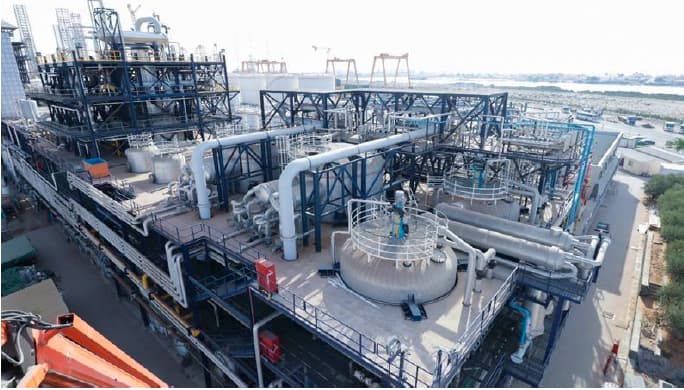
Land: HIRC is designed and constructed in 46,000 Sqm area of land with its unique design of positioning the vertical and horizontal intermediate tanks one on top of the other to ensure maximum space utilization
Recycling Processes
At Shahin Refinery, we specialize in advanced hydrocarbon waste recycling, utilizing cutting-edge technology and innovative processes to transform waste into valuable resources. Our recycling operations encompass a wide range of techniques designed to handle various types of hydrocarbon waste and off-spec products. Here are the key recycling processes we employ
Aromatic Extraction and Purification
This process involves extracting and purifying aromatic compounds such as benzene, toluene, and xylene (BTX) from pyrolysis oils and petrochemical byproducts. Using specialized solvents like NMP (N-Methyl-2-Pyrrolidone) or DMSO (Dimethyl Sulfoxide), we efficiently separate aromatic hydrocarbons, which are then further purified through distillation.
Engine and Turbine Oil Recovery
Waste oils from engines and turbines, which often contain contaminants like metals, water, and particulates, are treated using a series of purification steps. These include micro-filtration, dehydration, and vacuum distillation to remove contaminants and recover valuable base oils and other distillates for reuse.
Glycol Purification
Spent glycols, often contaminated with water, dirt, metals, and organic acids, are purified through a multi-step process involving micro-filtration, vacuum distillation, and carbon filtration. The result is high-purity glycol products such as Monoethylene Glycol (MEG), Diethylene Glycol (DEG), and Triethylene Glycol (TEG), suitable for reuse in various industries.
Tyre Pyrolysis Oil Processing
Pyrolysis oils derived from waste tyres are processed to separate valuable fractions like naphtha, kerosene, and diesel. These fractions are further refined and can be used as blending components in various fuel applications, supporting a circular economy by reusing waste materials.
Vacuum Distillation
This process is used to separate components in used oils and other hydrocarbon waste under reduced pressure, minimizing thermal degradation and maximizing yield. The vacuum distillation process helps in recovering lighter fractions, which can be used as solvents or fuel additives, while heavier fractions are further processed for additional value.
Solvent Stripping and De-metallization
Used to remove heavy metals and other contaminants from waste oils, this process ensures the purification of base oils and other hydrocarbon products. De-metallization kettles and solvent strippers effectively reduce impurities, making the recycled products suitable for high-value industrial applications.
Types of Waste Processed
Shahin Refinery is equipped to handle a variety of hydrocarbon waste types, including:
- Pyrolysis Oils: Derived from the thermal decomposition of materials like waste tyres and plastic.
- BTX Streams: Benzene, Toluene, and Xylene mixtures from petrochemical units.
- Used Lubricant Oils: Waste oils from engines and turbines, including spent turbine lubes.
- Contaminated Glycols: Spent glycol streams contaminated with water, dirt, metals, and other impurities.
- Hydrocarbon Condensates: Surplus condensates from various refining processes.
Products
Shahin Refinery produces a range of high-quality, recycled products that serve various industries. Here’s a detailed overview of each product and its applications:
Contact Us
We would love to hear from you! Whether you have questions about our services, need support, or want to explore potential partnerships, our team is here to help. Reach out to us through any of the following methods:
-
Hamriyah Free Zone, Phase 1, Sharjah, UAE
-
info@shahinrefinery.com
Get Free Consultation!
We are ready to answer right now! Sign up for a free consultation.
I consent to the processing of personal data and agree with the user agreement and privacy policy